Air travel often feels simple on the surface: you book a ticket, board a plane, and arrive at your destination. Behind that experience, however, sits one of the most complex global industries in operation. Many readers wonder how airlines actually grow, how they manage to stay profitable despite high costs, and what long-term forces continue to shape aviation around the world.
This article breaks down the global airline industry in a clear, time-neutral way. It explains how the industry is structured, how airlines generate revenue and manage risk, and which enduring trends continue to influence its direction. The goal is not to track short-term changes, but to help you understand how the system works and why it evolves the way it does.
How the Global Airline Industry Is Structured
A network built on connectivity
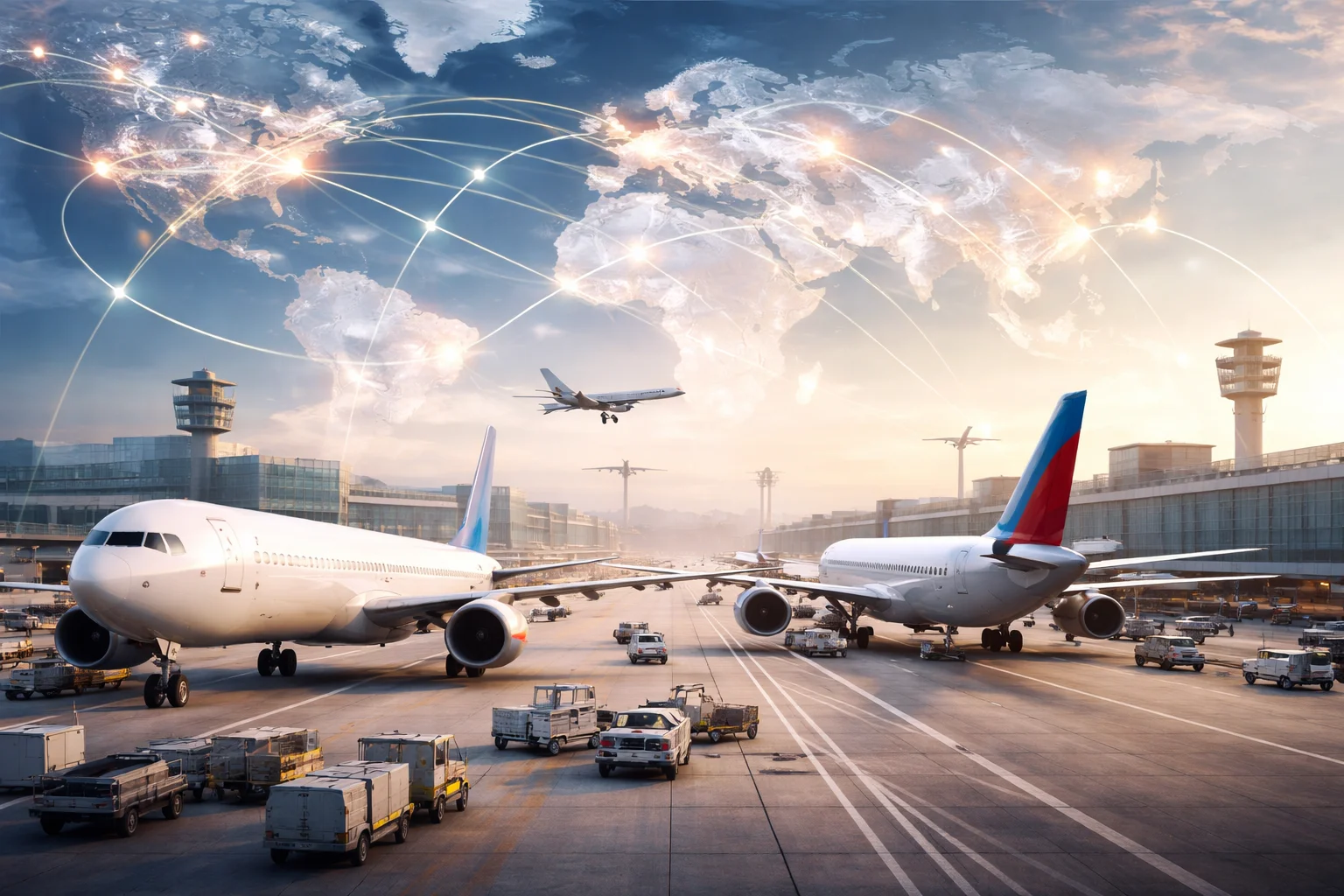
At its core, the airline industry exists to move people and goods across long distances efficiently. Airlines operate within vast networks that connect cities, regions, and continents. These networks are designed to balance convenience for travelers with operational efficiency for airlines.
Some airlines focus on point-to-point travel, flying directly between destinations. Others rely on hub-and-spoke systems, where passengers pass through central airports before continuing onward. Both approaches coexist because they serve different market needs and cost structures.
Passenger and cargo operations
While passenger travel is the most visible side of aviation, cargo plays an equally important role. Many airlines carry freight in dedicated aircraft or in the cargo holds of passenger planes. This dual function allows airlines to maximize aircraft utilization and diversify income streams.
Cargo demand often follows global trade patterns rather than leisure or business travel cycles, giving airlines a degree of balance across different economic conditions.
Regulation and international coordination
Aviation operates across national borders, making regulation unavoidable. Safety standards, air traffic management, and aircraft certification rely on international coordination. While regulatory frameworks differ by region, shared global standards ensure that airlines can operate consistently and safely across countries.
This regulatory environment creates stability but also adds complexity, as airlines must comply with multiple layers of rules while maintaining operational efficiency.
What Drives Growth in the Airline Industry
Rising demand for mobility
One of the most enduring drivers of airline growth is the human desire to travel. People fly for business, leisure, education, family connections, and cultural exchange. As economies develop and incomes rise, air travel becomes accessible to a broader population.
Growth does not always come from new destinations alone. Increased frequency on existing routes, larger aircraft, and improved load management all contribute to expanding capacity without fundamentally changing networks.
Urbanization and global integration
As cities grow and economies become more interconnected, air travel supports trade, tourism, and professional mobility. Airlines act as enablers of globalization, linking supply chains and service industries across continents.
This structural role means that airline growth is closely tied to broader economic and social patterns rather than isolated industry decisions.
Technological improvements
Advances in aircraft design, navigation systems, and operational software have steadily improved efficiency. Longer-range aircraft open new routes, while better fuel performance lowers per-seat costs. These improvements allow airlines to serve markets that were previously impractical or unprofitable.
Technology also influences passenger experience, from booking systems to in-flight comfort, shaping demand in subtle but lasting ways.
How Airlines Generate Revenue and Manage Profits
Ticket pricing and revenue management
Airline pricing often appears unpredictable, but it follows structured logic. Airlines use revenue management systems to adjust fares based on demand, booking patterns, and seat availability. The goal is not to fill every seat at the lowest price, but to maximize overall revenue across the entire flight.
Different passengers value flexibility, comfort, and timing differently. Airlines design fare classes to match these preferences, allowing them to serve a wide range of customers on the same aircraft.
Ancillary services as a profit layer
Beyond ticket sales, airlines generate income through additional services. These can include seat selection, baggage options, onboard purchases, and loyalty program partnerships. Ancillary revenue has become an important buffer against the industry’s traditionally thin margins.
This approach allows airlines to offer lower base fares while giving passengers control over how much they spend based on their needs.
Cost structures and financial discipline
Airlines face high fixed and variable costs. Aircraft acquisition, maintenance, fuel, staffing, and airport fees all weigh heavily on operating budgets. Profitability depends on disciplined cost management as much as on revenue growth.
Successful airlines focus on efficiency at every stage, from fuel planning to crew scheduling. Even small improvements, when applied across large networks, can have significant financial impact.
Common Misconceptions About Airline Profitability
High ticket prices do not equal high profits
A common assumption is that expensive tickets automatically mean airlines are highly profitable. In reality, aviation margins are often narrow. High fares may reflect long distances, limited competition, or premium service rather than excess profit.
Airlines must cover substantial costs before generating any surplus, and profitability can vary widely between routes and seasons.
Growth does not always mean stability
Expanding fleets and routes can signal success, but growth also increases complexity and risk. New aircraft require financing, new routes demand marketing and operational support, and larger networks are harder to manage efficiently.
Sustainable growth focuses on balance rather than expansion for its own sake.
Long-Term Trends Shaping the Airline Industry
Sustainability and environmental responsibility
Environmental impact has become a central consideration in aviation. Airlines are investing in more efficient aircraft, operational improvements, and alternative fuel development to reduce emissions over time.
Rather than a single solution, sustainability in aviation involves incremental progress across technology, operations, and infrastructure.
Digital transformation of operations
Digital systems increasingly underpin airline operations. From predictive maintenance to automated customer service, technology helps airlines reduce delays, improve reliability, and enhance passenger experience.
These changes are structural rather than temporary, reflecting a long-term shift toward data-driven decision-making.
Evolving passenger expectations
Passengers expect convenience, transparency, and flexibility. This influences everything from booking interfaces to baggage policies. Airlines that align their services with these expectations tend to build stronger customer loyalty.
At the same time, price sensitivity remains high, forcing airlines to balance service quality with affordability.
The Role of Airlines in the Global Economy
Supporting trade and tourism
Airlines enable global tourism, which supports millions of jobs across hospitality, retail, and cultural sectors. They also facilitate high-value, time-sensitive cargo transport, supporting industries such as technology, healthcare, and manufacturing.
This economic role gives aviation a strategic importance beyond transportation alone.
Resilience through adaptation
The airline industry has repeatedly demonstrated its ability to adapt to changing conditions. Network adjustments, fleet flexibility, and diversified revenue models help airlines respond to shifts in demand and cost pressures.
Resilience is built into the system through experience, regulation, and continuous learning.
Frequently Asked Questions
Why is the airline industry considered high risk?
The industry combines high operating costs with sensitivity to economic conditions, fuel prices, and external disruptions. While demand for travel is durable over the long term, short-term fluctuations require careful financial and operational planning.
How do airlines decide which routes to operate?
Route decisions are based on demand analysis, competition, aircraft capability, and network strategy. Airlines evaluate whether a route supports their broader network goals rather than viewing each flight in isolation.
Can airlines remain profitable while improving sustainability?
Yes, though it requires long-term investment and operational efficiency. Fuel-efficient aircraft and smarter flight planning can reduce environmental impact while also lowering costs, aligning sustainability with financial goals.
Conclusion
The global airline industry is built on complex systems that balance growth, profitability, and responsibility. Its long-term stability depends on efficient networks, disciplined cost management, and an ongoing ability to adapt to changing expectations and constraints.
By understanding how airlines operate beneath the surface, it becomes clear that aviation is not driven by short-term trends alone. Instead, it evolves through enduring patterns of demand, technology, regulation, and human mobility. This perspective helps explain why the industry remains essential to the global economy and how it continues to move the world forward.

Related Posts