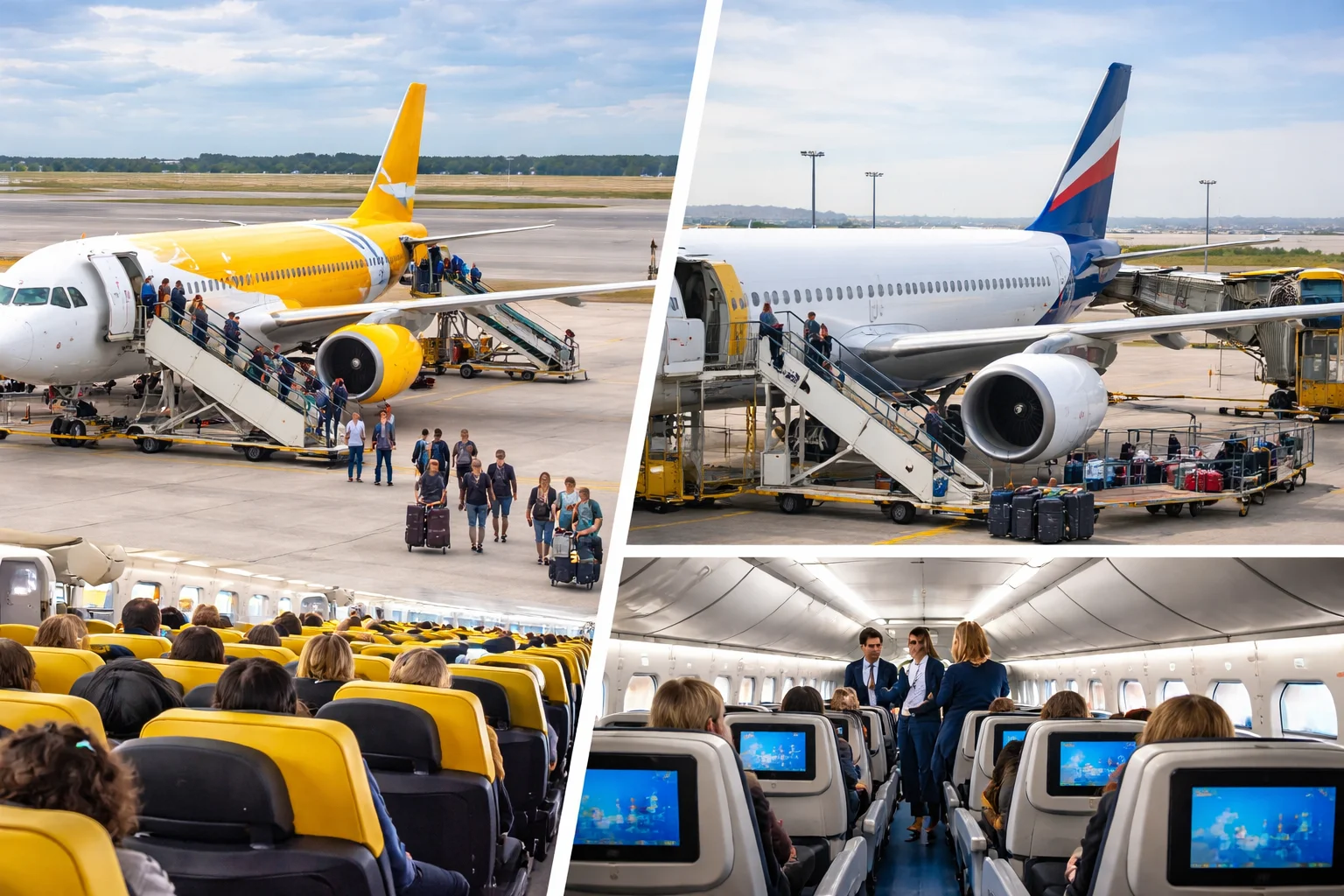
Airline tickets often look similar at first glance. Two flights may depart at the same time, land at the same destination, and even use similar aircraft. Yet the prices, rules, and overall experience can feel worlds apart. This is where many travelers get confused: Why is one option so much cheaper than the other, and what am I actually giving up—or gaining?
This guide breaks down the real differences between low-cost airlines and full-service airlines. Instead of focusing on temporary offers or specific companies, it explains how each model works, why the differences exist, and how they affect passengers in practical, long-term ways. By the end, you’ll be able to choose confidently based on your needs, not just the ticket price.
Understanding the Two Airline Models
What defines a low-cost airline
Low-cost airlines are built around a simple idea: keep fares low by stripping the service down to the essentials. The base ticket usually covers only transportation from one airport to another. Almost everything else is optional.
This model focuses on:
- High aircraft utilization with quick turnarounds
- Simple cabin layouts with one main seating class
- Paid add-ons for services that traditional airlines include by default
The goal is efficiency. By controlling costs tightly, these airlines can offer lower starting fares and let passengers decide what extras, if any, they want to pay for.
What defines a full-service airline
Full-service airlines operate on a more traditional model. The ticket price typically includes several services beyond the seat itself, such as checked baggage, in-flight meals, and customer support options.
This approach emphasizes:
- Multiple cabin classes with different comfort levels
- Broader route networks, including long-haul and connecting flights
- A more comprehensive travel experience from booking to arrival
Instead of unbundling services, full-service airlines bundle them together, creating a more predictable experience for many travelers.
Ticket Pricing and What You’re Really Paying For
Base fares vs bundled pricing
The most obvious difference is price, but the structure behind that price matters more than the number itself.
Low-cost airline fares are designed to look attractive at first. The base fare is often minimal, but the final price depends on the choices you make afterward. Seat selection, baggage, meals, and even boarding priority may cost extra.
Full-service airline fares usually appear higher upfront. However, many common travel needs are already included. For passengers who value convenience or plan to use these services anyway, the total cost can sometimes be closer than expected.
See also How Airlines Make Money: Revenue Models Explained Simply
How add-ons change the final cost
Add-ons are central to the low-cost model. Each optional service is priced separately, allowing passengers to customize their trip. This can be a benefit for light travelers who don’t need extras, but it requires attention during booking.
Full-service airlines rely less on add-ons for basic services, though optional upgrades still exist. The key difference is that the essentials are already part of the fare, reducing surprises later.
Baggage Policies Explained
Carry-on and personal items
Low-cost airlines often distinguish carefully between personal items and carry-on bags. A small bag that fits under the seat may be included, while larger carry-ons might incur a fee.
Full-service airlines generally include a standard carry-on allowance. The rules are simpler, and overhead bin access is less restricted for economy passengers.
Checked baggage allowances
Checked baggage is one of the biggest cost variables. On low-cost airlines, checked bags almost always cost extra and are cheaper when purchased in advance.
Full-service airlines usually include at least one checked bag on many routes, particularly on longer flights. This makes them appealing for travelers carrying more than minimal luggage.
Seat Comfort and Cabin Experience
Seating layouts and legroom
Low-cost airlines tend to maximize seating density. Seats are functional, with limited recline and tighter legroom. The focus is on transporting passengers efficiently rather than providing extended comfort.
Full-service airlines offer more varied seating options. Even in economy class, legroom and cushioning are often slightly better. Premium cabins provide additional space and amenities for those willing to pay more.
Cabin atmosphere and amenities
The cabin experience on low-cost airlines is intentionally simple. Entertainment systems are rare, and passengers are encouraged to bring their own devices.
Full-service airlines usually offer in-flight entertainment, power outlets on many aircraft, and a quieter cabin environment designed for longer journeys.
Food, Drinks, and In-Flight Services
Buy-on-board vs included service
On low-cost airlines, food and drinks are typically sold on board. The selection is straightforward, and passengers pay only if they choose to eat or drink.
Full-service airlines include meals or snacks on many routes, especially longer ones. The service level varies by flight length and cabin class but follows a consistent standard.
Service philosophy
Low-cost airline crews focus on efficiency and safety, with service structured around optional purchases. Full-service airline crews provide a more traditional hospitality-oriented experience, with service built into the journey rather than added on.
Routes, Connections, and Network Reach
Point-to-point vs hub-based systems
Low-cost airlines usually operate point-to-point routes. This means direct flights between specific cities without relying heavily on connections. It keeps operations simple but limits flexibility if plans change.
Full-service airlines operate hub-based networks. Passengers can connect through major airports to reach a wide range of destinations, making these airlines more suitable for complex itineraries.
Long-haul and international travel
Low-cost airlines are strongest on short to medium routes. Some operate longer flights, but the experience remains minimalist.
Full-service airlines dominate long-haul travel. Their cabin configurations, onboard services, and baggage policies are designed to support extended journeys.
Flexibility, Changes, and Customer Support
Ticket changes and cancellations
Low-cost airline tickets are often restrictive. Changes and cancellations may incur significant fees, sometimes approaching the cost of a new ticket.
Full-service airlines generally offer more flexible fare options. While basic fares may still have limits, higher fare tiers often allow changes with reduced penalties.
Customer service access
Low-cost airlines rely heavily on digital self-service. This keeps costs down but can feel impersonal during disruptions.
Full-service airlines maintain broader customer support channels, including phone assistance and airport service desks, which many travelers value during unexpected situations.
Reliability and Operational Priorities
On-time performance and scheduling
Both airline models prioritize safety and punctuality, but their operational strategies differ.
Low-cost airlines often schedule tight turnaround times to keep aircraft flying. This efficiency supports low fares but can leave less room for recovery during delays.
Full-service airlines typically build more buffer into schedules, especially at major hubs. This can help manage disruptions more smoothly across a network.
Handling disruptions
When flights are delayed or canceled, full-service airlines usually have more options to rebook passengers through their networks. Low-cost airlines may have fewer alternatives, particularly on less frequent routes.
Choosing the Right Option for Your Travel Style
When a low-cost airline makes sense
Low-cost airlines work well for:
- Short trips with minimal luggage
- Travelers focused on price over comfort
- Flexible passengers who don’t need extensive support
They reward preparation and careful booking, especially when add-ons are selected in advance.
When a full-service airline is the better choice
Full-service airlines are better suited for:
- Longer journeys or international travel
- Trips involving connections
- Travelers who value comfort, flexibility, and included services
The higher upfront price often reflects a more comprehensive travel experience.
Common Misconceptions About Airline Types
“Low-cost means unsafe”
Safety standards are regulated at the industry level. Both low-cost and full-service airlines must meet the same safety requirements. The difference lies in service levels, not safety.
“Full-service is always more expensive”
While full-service tickets often cost more initially, the value can be comparable once baggage, meals, and flexibility are considered.
“You always get less with low-cost airlines”
Low-cost airlines give passengers control over what they pay for. For some travelers, this customization is an advantage rather than a drawback.
Frequently Asked Questions
Is one type of airline better for first-time flyers?
First-time flyers often find full-service airlines easier because more services are included and rules are simpler. However, low-cost airlines can still be a good option if the traveler understands the fare structure.
Do low-cost airlines save money in the long run?
They can, especially for frequent short trips with light luggage. The key is understanding which services cost extra and planning accordingly.
Are full-service airlines more reliable overall?
Reliability depends on many factors, including routes and operations. Full-service airlines generally offer more support during disruptions due to their larger networks.
Final Thoughts
Low-cost airlines and full-service airlines are built on different philosophies, not different standards of safety or professionalism. One focuses on efficiency and choice, the other on completeness and comfort.
Understanding how each model works allows travelers to look beyond the ticket price and choose based on real needs. When expectations align with the airline’s approach, both options can deliver a satisfying travel experience—without surprises.

Related Posts