Air traffic radar often feels mysterious from the outside. Many people know that aircraft are “tracked by radar,” but fewer understand that there are two fundamentally different radar systems working together behind the scenes. This confusion leads to common questions: Why are there two systems? Do they do the same job? And why does aviation still rely on both?
This guide clears that up. By the end, you will understand what primary radar and secondary radar are, how they work, where each one fits into aviation operations, and why both remain essential in modern airspace management.
Understanding Radar in Aviation
Radar exists to answer one core question: Where is the aircraft, and how is it moving? Different radar systems answer that question in different ways, each with its own strengths and limitations.
Before comparing primary and secondary radar, it helps to understand what radar is designed to do in an aviation environment.
What Radar Is Designed to Do
In aviation, radar systems help controllers:
- Detect aircraft presence
- Determine position and movement
- Maintain safe separation
- Support navigation and surveillance
Not all radar systems gather information the same way. Some rely purely on physics, while others depend on cooperation from the aircraft itself.
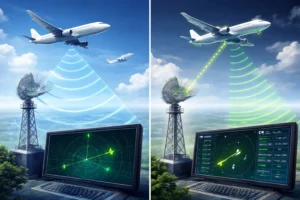
Why Two Radar Systems Exist
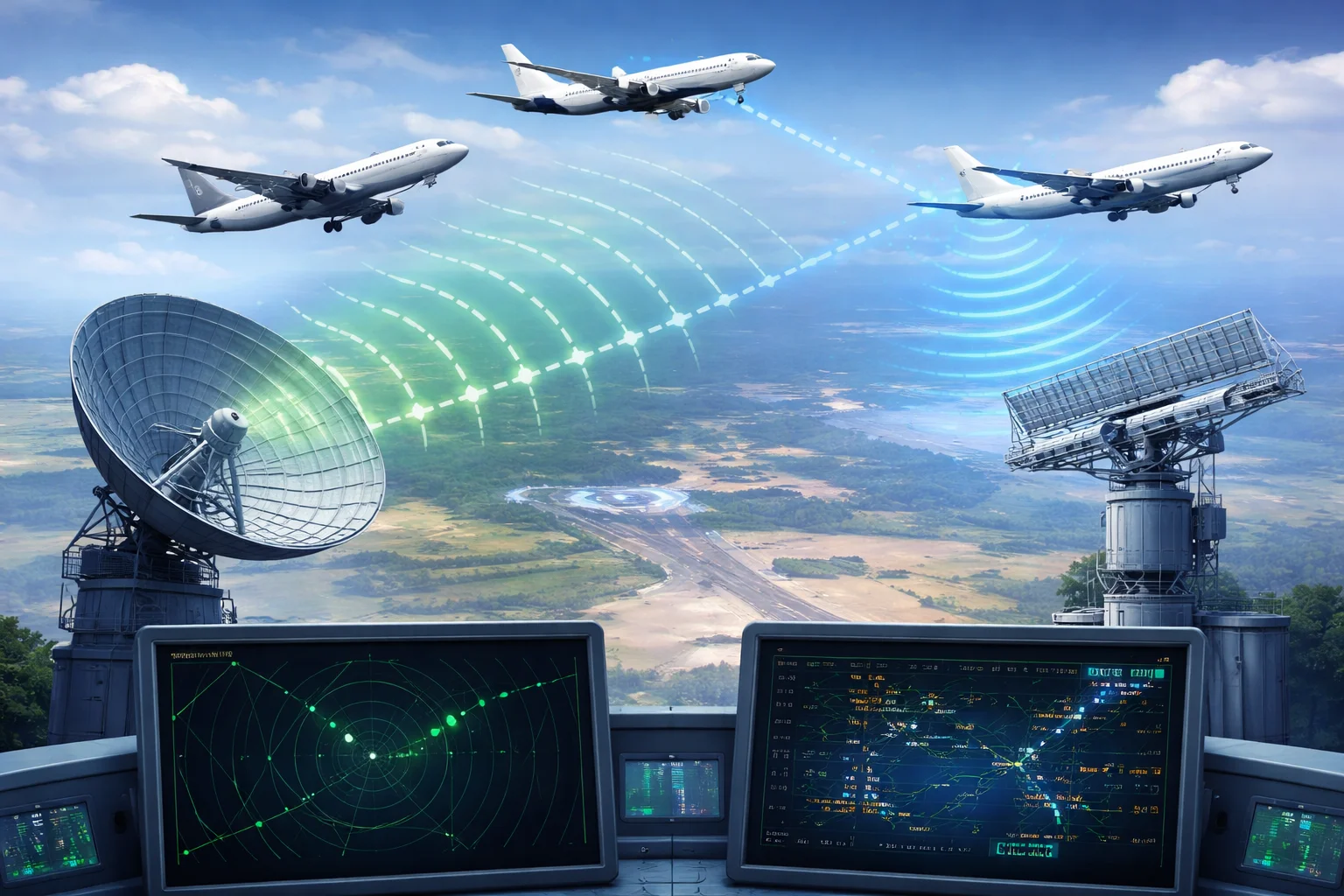
Primary and secondary radar were developed to solve different operational problems. One focuses on detection without assistance. The other focuses on identification and detailed data. Together, they form a layered surveillance approach that improves safety and reliability.
What Is Primary Radar?
Primary radar is the most fundamental form of radar surveillance. It operates independently of the aircraft being detected.
How Primary Radar Works
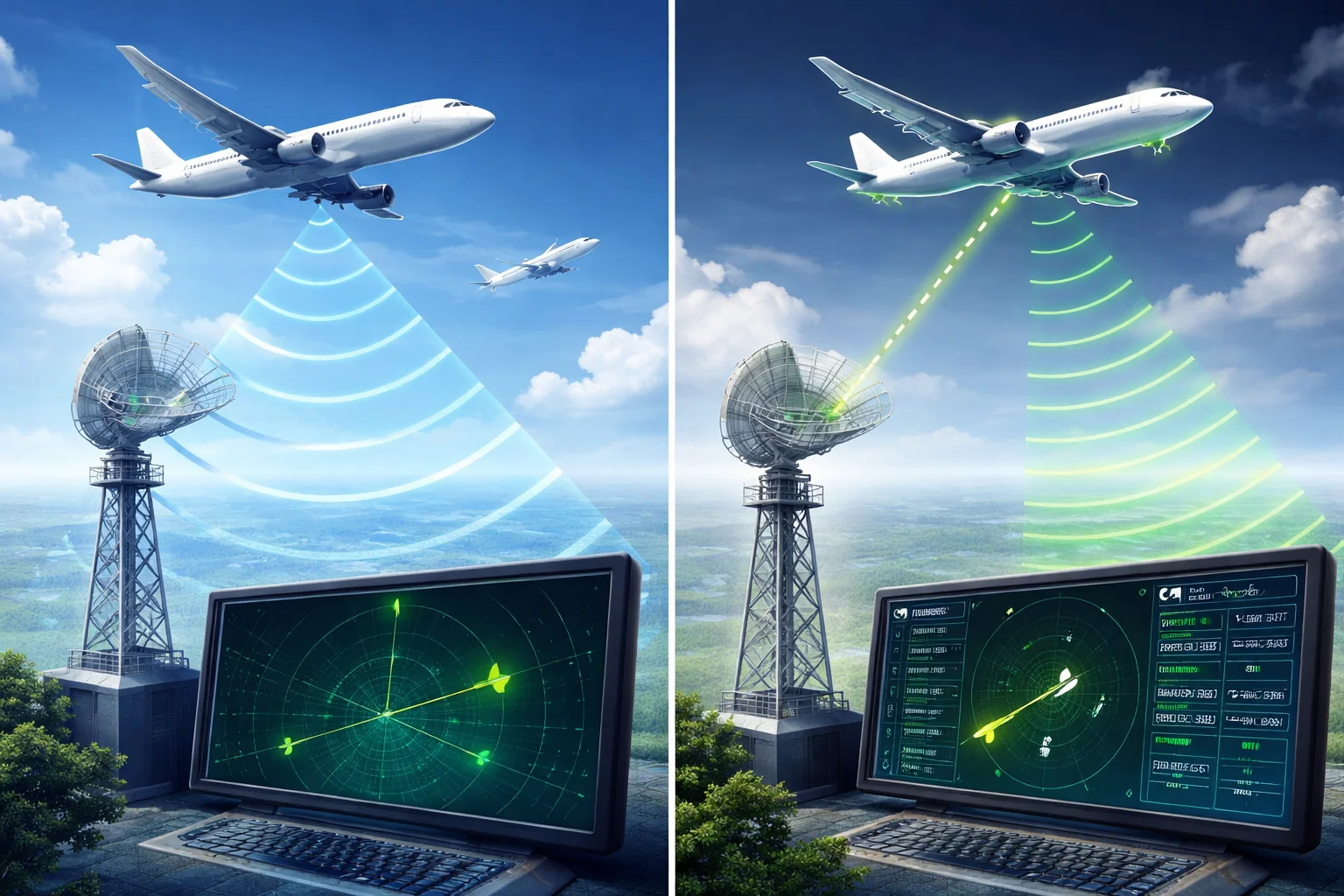
Primary radar sends out radio waves that travel through the air. When these waves strike an object, such as an aircraft, part of the signal reflects back to the radar antenna. The system then calculates:
- Distance (based on signal return time)
- Direction (based on antenna position)
This process works without any involvement from the aircraft itself.
What Information Primary Radar Provides
Primary radar typically shows:
- Aircraft position
- Relative movement over time
It does not provide identity, altitude, or aircraft-specific details. On a controller’s screen, targets often appear as simple dots or blips.
Strengths of Primary Radar
Primary radar has several enduring advantages:
- Detects any reflective object, cooperative or not
- Does not rely on onboard aircraft systems
- Useful for unknown or unresponsive targets
Because of this, it plays an important role in military surveillance and backup civil aviation systems.
Limitations of Primary Radar
Despite its reliability, primary radar has drawbacks:
- Limited information output
- Susceptible to clutter from weather or terrain
- Less precise compared to cooperative systems
These limitations led to the development of a complementary solution.
What Is Secondary Radar?
Secondary radar depends on cooperation between the ground system and the aircraft.
How Secondary Radar Works
Instead of relying on reflected signals, secondary radar sends out an interrogation signal. Aircraft equipped with a transponder respond with a coded reply. This reply contains specific information chosen by the system design.
What Information Secondary Radar Provides
Secondary radar can supply:
- Aircraft identity or code
- Pressure altitude
- Enhanced position accuracy
- Additional status data
This turns a simple target into an identifiable aircraft with clear operational context.
Strengths of Secondary Radar
Secondary radar offers major benefits:
- Rich data beyond position
- Clear aircraft identification
- Reduced clutter and false targets
- Better integration with automation systems
These advantages make it the backbone of civil air traffic surveillance.
Limitations of Secondary Radar
Secondary radar depends on cooperation:
- Aircraft must have a functioning transponder
- Incorrect settings can affect accuracy
- Non-cooperative targets remain invisible
For this reason, secondary radar does not fully replace primary radar.
Primary Radar vs Secondary Radar: Key Differences
Understanding the contrast between these systems helps clarify why both still exist.
Detection Method
Primary radar detects objects by reflection. Secondary radar detects aircraft by response. One listens for echoes; the other listens for replies.
Aircraft Cooperation
Primary radar works without aircraft involvement. Secondary radar requires onboard equipment and correct operation.
Type of Information
Primary radar shows presence and movement. Secondary radar adds identity, altitude, and coded data.
Accuracy and Clarity
Secondary radar generally provides cleaner, more precise tracking. Primary radar is broader and less detailed.
Operational Role
Primary radar acts as a safety net and detection layer. Secondary radar acts as the primary tool for air traffic management.
Why Aviation Still Uses Both Systems
Modern aviation favors layered safety. Each radar type fills gaps left by the other.
Redundancy and Safety
If an aircraft’s transponder fails, secondary radar data disappears. Primary radar can still detect the aircraft’s presence, maintaining situational awareness.
Handling Non-Cooperative Targets
Not all airborne objects cooperate. Primary radar remains essential for detecting unidentified or unresponsive traffic.
Different Airspace Needs
Busy controlled airspace benefits from detailed data. Remote or sensitive areas benefit from independent detection. Using both systems allows flexibility across environments.
Common Misconceptions About Aviation Radar
Misunderstandings about radar are widespread, even among aviation enthusiasts.
“Secondary Radar Replaced Primary Radar”
Secondary radar did not eliminate primary radar. It supplemented it. Both systems coexist by design.
“Radar Always Shows Altitude”
Altitude comes from transponder data, not reflected signals. Without secondary radar, altitude information is unavailable.
“If Radar Sees It, Controllers Know Everything”
Radar provides data, not intent. Controllers interpret information but still rely on communication and procedures.
How Pilots Interact With Radar Systems
Pilots do not directly control ground radar, but their actions affect what controllers see.
Transponder Responsibilities
Pilots must:
- Activate the transponder
- Select correct operating modes
- Enter assigned identification codes
Correct use ensures accurate tracking and identification.
Communication Complements Radar
Radar and radio communication work together. Radar shows position; communication clarifies intentions.
The Long-Term Role of Radar in Aviation
As aviation systems evolve, radar remains a foundational surveillance method.
Radar as a Proven Technology
Radar has endured because it is:
- Reliable
- Independent
- Based on physical principles
- Effective in diverse conditions
New technologies may supplement radar, but its core role remains stable.
Integration With Broader Systems
Radar data feeds navigation displays, automation tools, and safety systems. Its value lies not just in detection, but in how consistently it supports decision-making.
Frequently Asked Questions
Is primary radar still necessary in modern aviation?
Yes. Primary radar provides independent detection and serves as a critical backup when cooperative systems fail or targets do not respond.
Can secondary radar work without primary radar?
Secondary radar can operate on its own, but aviation safety benefits from having primary radar available as an additional detection layer.
Do all aircraft appear on secondary radar?
Only aircraft with functioning transponders appear on secondary radar. Without a response, the system cannot display the aircraft.
Conclusion
Primary and secondary radar are not competing systems. They are complementary tools designed to solve different surveillance challenges in aviation. Primary radar offers independent detection. Secondary radar delivers detailed, cooperative information. Together, they create a robust and resilient air traffic monitoring environment.
Understanding how these systems differ helps explain why aviation relies on layered technologies rather than single solutions. This balance between independence and cooperation is a key reason radar continues to support safe and orderly flight operations across the world.

Related Posts