Introduction
Many people hear about electric planes and sustainable aviation but aren’t quite sure what those terms actually mean in practice. Are electric aircraft meant to replace all airplanes? How do they work without traditional fuel? And what does “sustainable aviation” really involve beyond catchy phrases?
This article is designed to clear that confusion. It explains how next-generation aircraft are being designed, how electric and low-emission systems function, and why these changes matter for aviation as a whole. Rather than focusing on short-term developments or announcements, it explores the core ideas, systems, and direction shaping the future of flight.
What Is Meant by Next-Generation Aircraft?
Moving Beyond Traditional Aircraft Design
Next-generation aircraft refer to airplanes built with new priorities compared to conventional designs. Traditional aircraft were optimized primarily for speed, range, and payload, using fossil-based fuels as a given. Newer designs expand those priorities to include energy efficiency, environmental impact, and quieter operation.
This shift affects everything from propulsion systems and materials to how aircraft are manufactured and maintained. The goal is not novelty, but smarter use of energy and resources across an aircraft’s entire lifecycle.
Why Aviation Needs to Evolve
Aviation is an essential part of global transportation, connecting people, goods, and economies. At the same time, it relies heavily on energy-intensive systems. As aviation continues to evolve, the industry faces pressure to reduce emissions, lower noise levels, and operate more efficiently without sacrificing safety or reliability.
Next-generation aircraft are one response to that challenge, focusing on redesign rather than minor tweaks.
How Electric Aircraft Work
The Basics of Electric Propulsion
Electric aircraft use electric motors instead of, or in addition to, traditional combustion engines. These motors convert electrical energy into mechanical motion, turning propellers or fans. The electricity typically comes from onboard energy storage systems, such as batteries, or from hybrid setups that combine electric power with conventional engines.
Electric motors are mechanically simpler than combustion engines. They have fewer moving parts, produce less vibration, and can deliver power more smoothly.
Energy Storage and Power Management
One of the most important aspects of electric flight is energy storage. Aircraft require lightweight yet powerful energy sources to stay airborne safely. This makes power management a central design concern.
Engineers focus on balancing energy capacity, weight, thermal control, and reliability. Even small improvements in energy efficiency can have a large impact on aircraft performance, especially for shorter routes.
Hybrid and Distributed Systems
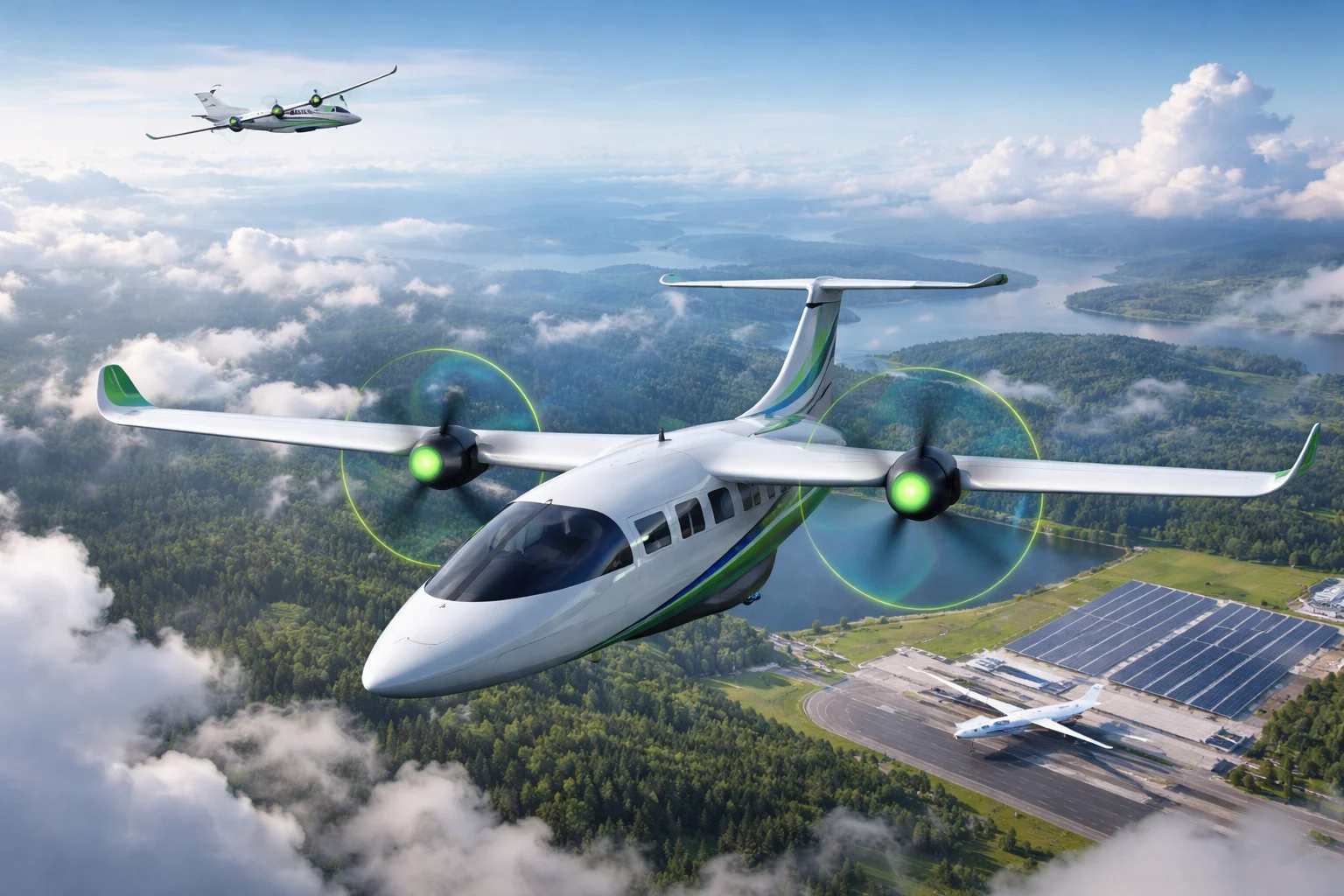
Not all electric aircraft rely on a single approach. Some use hybrid systems where electric motors assist traditional engines during certain phases of flight, such as takeoff or climb. Others use distributed propulsion, placing multiple smaller motors across the airframe instead of relying on a single large engine.
These configurations allow designers to rethink airflow, lift, and redundancy in ways that were not practical with older technology.
What Sustainable Aviation Really Means
Sustainability Beyond the Engine
Sustainable aviation is often misunderstood as simply switching fuels or engines. In reality, it covers the entire aviation ecosystem. This includes how aircraft are built, how energy is produced, how flights are operated, and how materials are reused or recycled at the end of an aircraft’s life.
Electric propulsion is one piece of a much larger puzzle that includes operational efficiency and environmental responsibility.
Reducing Environmental Impact Over Time
Sustainability in aviation focuses on reducing cumulative impact rather than achieving instant transformation. Incremental improvements in fuel efficiency, noise reduction, and emissions can compound significantly over decades of operation.
Electric and low-emission aircraft help address these goals by reducing reliance on combustion-based systems, particularly in short-haul and regional operations.
Where Electric Aircraft Make the Most Sense
Short-Range and Regional Flights
Electric aircraft are especially well suited for shorter distances. These routes typically require less onboard energy and allow aircraft to recharge or refuel more frequently. Regional flights also benefit from quieter operations, which can reduce noise impact around airports.
For passengers, these flights often feel similar to traditional air travel, with differences happening mostly behind the scenes.
Training, Cargo, and Specialized Roles
Electric aircraft are also well matched to pilot training, cargo transport, and specialized missions. These roles often involve predictable routes, controlled environments, and repeated short flights, making them ideal testing grounds for new propulsion systems.
In these settings, the lower maintenance needs of electric motors can offer practical advantages.
Common Misconceptions About Electric Planes
“Electric Planes Will Replace All Aircraft”
A common misconception is that electric planes are meant to replace every existing aircraft. In reality, aviation is diverse. Different aircraft serve different purposes, from long-haul international flights to local transport.
Electric systems are one solution among many, designed to complement rather than completely replace other technologies.
“Electric Aircraft Are Experimental or Unsafe”
Another misunderstanding is that electric aircraft are inherently experimental or less safe. Aviation standards are built around redundancy, testing, and certification. Electric propulsion systems are evaluated using the same rigorous safety frameworks as any other aircraft component.
In some cases, simpler mechanical systems can even improve reliability.
How Infrastructure and Operations Are Adapting
Charging, Energy Supply, and Airports
For electric aircraft to operate efficiently, ground infrastructure must support them. This includes charging systems, energy storage on the ground, and coordination with airport operations.
Airports already manage complex systems for fueling, maintenance, and scheduling. Integrating electric energy systems builds on these existing practices rather than replacing them entirely.
Maintenance and Reliability
Electric motors typically require less routine maintenance than combustion engines. Over time, this can simplify maintenance schedules and reduce downtime.
However, new systems also require new expertise. Training technicians and pilots to work with electric propulsion is part of the broader transition toward next-generation aviation.
The Role of Electric and Sustainable Aircraft
A Gradual, Integrated Transition
The move toward electric and sustainable aviation is not a sudden shift. It is a gradual process that integrates new technologies where they make the most sense while maintaining proven systems elsewhere.
This measured approach helps ensure safety, reliability, and public trust remain central to aviation’s evolution.
Building a More Efficient Aviation System
Ultimately, next-generation aircraft are about efficiency in the broadest sense: energy efficiency, operational efficiency, and environmental efficiency. Electric planes and sustainable practices encourage smarter design choices that benefit airlines, airports, and passengers alike.
Frequently Asked Questions
Are electric planes quieter than traditional aircraft?
Electric motors generally produce less noise than combustion engines. This can significantly reduce noise during takeoff and landing, especially for aircraft operating near populated areas.
Do electric aircraft still produce emissions?
Electric aircraft do not produce direct exhaust emissions during flight. Overall environmental impact depends on how the electricity used to power them is generated, which is why sustainable energy systems are an important part of the broader picture.
Will flying feel different on an electric plane?
For most passengers, the experience is very similar to conventional flight. The main differences are often reduced noise and smoother acceleration, rather than changes in cabin layout or procedures.
Conclusion
Next-generation aircraft represent a thoughtful evolution of aviation rather than a dramatic break from the past. Electric planes and sustainable aviation systems focus on improving how aircraft use energy, how they interact with the environment, and how they fit into a transportation system.
By understanding how these technologies work and where they are most effective, it becomes clear that the future of aviation is not about a single solution, but about smarter, more responsible design choices that stand the test of time.

Related Posts