Airplanes crisscross the sky every day, yet most people rarely think about how those movements are tracked, coordinated, and understood in real time. Some imagine air traffic monitoring as a single radar screen in a control tower. Others assume it is only for pilots or aviation professionals. In reality, live air traffic monitoring is a global system that blends technology, standards, and data-sharing to create a constantly evolving picture of the world’s airspace.
This article breaks down how live air traffic monitoring works, why it matters, and how people interact with it. You do not need a background in aviation to follow along. By the end, you will understand the fundamentals that remain true regardless of changing tools or platforms.
What Is Live Air Traffic Monitoring?
Live air traffic monitoring refers to the continuous tracking and visualization of aircraft as they move through controlled and uncontrolled airspace. It turns raw flight signals into understandable information such as position, altitude, speed, and direction.
The core idea behind flight tracking
At its heart, air traffic monitoring answers one simple question: where is an aircraft, and how is it moving? Every aircraft follows a planned route, but conditions like weather, congestion, and operational needs can affect how that route unfolds. Monitoring systems provide situational awareness by showing what is actually happening, not just what was planned.
How “live” data is created
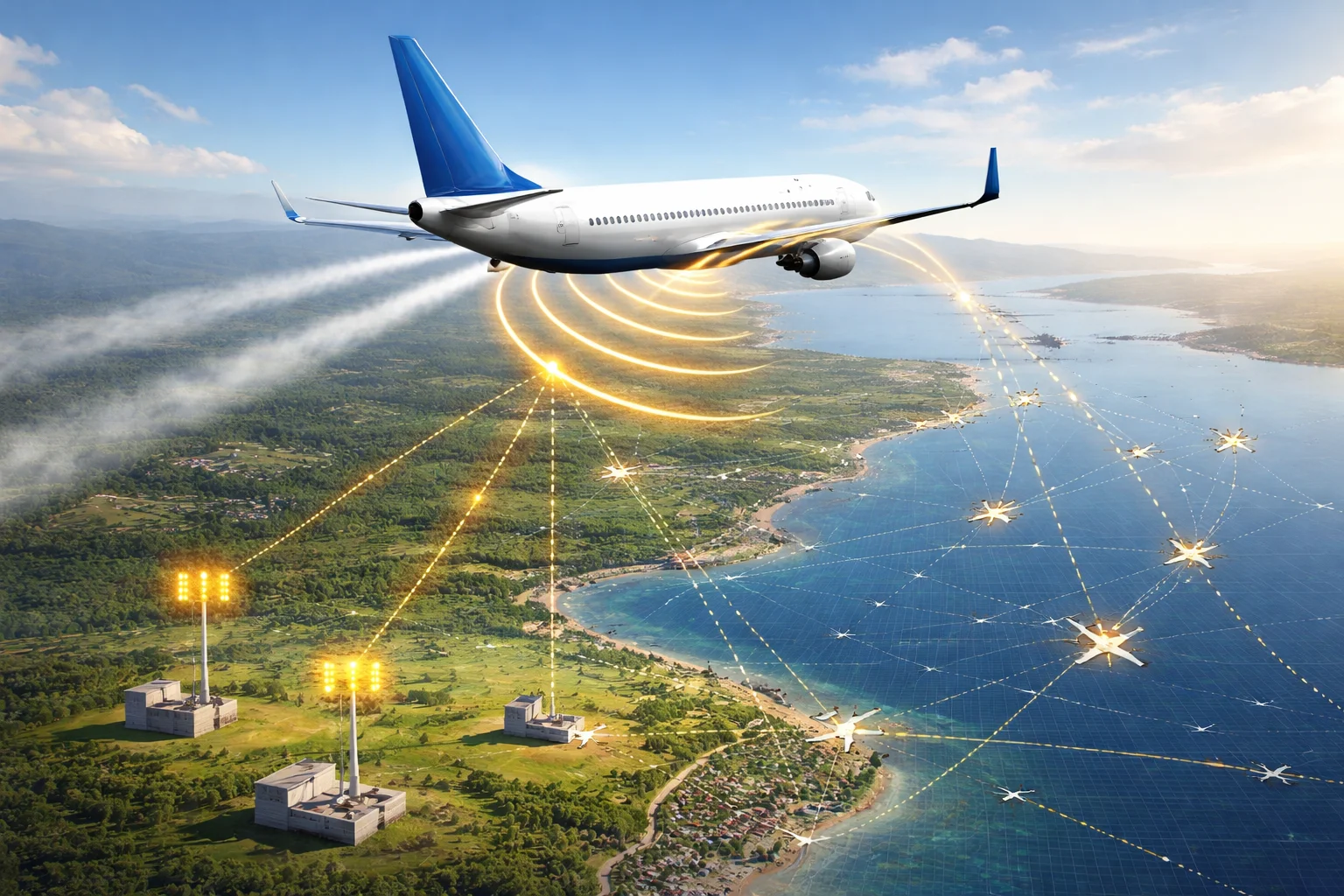
The term “live” does not mean instant in the absolute sense. It means data is transmitted, processed, and displayed with minimal delay. Aircraft regularly broadcast signals that are picked up by ground stations, satellites, or both. These signals are then translated into usable flight information that updates continuously as the aircraft moves.
How Aircraft Are Tracked Around the World
Global flight monitoring relies on several complementary technologies rather than a single method. Each plays a role depending on location, altitude, and airspace type.
Radar-based tracking systems
Traditional radar systems send out radio waves that bounce off aircraft and return to a receiver. This method has been used for decades and remains reliable within certain ranges. Radar is especially effective near airports and in heavily controlled airspace, where precision and redundancy are essential.
See also Military Aviation News: Air Force Movements and Airspace Control
Broadcast-based tracking from aircraft
Modern aircraft often transmit their own position data automatically. Instead of waiting to be “seen” by radar, the aircraft announces where it is and how it is moving. This approach improves accuracy and allows tracking in areas where radar coverage is limited.
Satellite-assisted monitoring
Over oceans, deserts, and remote regions, ground-based coverage becomes sparse. Satellite-assisted monitoring fills these gaps by receiving aircraft signals from space. This creates a more complete global picture and supports long-distance and intercontinental flights where traditional systems are less practical.
Why Live Air Traffic Monitoring Matters
Flight tracking is not just about curiosity or visualization. It plays a critical role in safety, efficiency, and transparency across the aviation ecosystem.
Supporting safe separation of aircraft
One of the primary goals of air traffic monitoring is preventing aircraft from coming too close to one another. By knowing precise positions and trajectories, controllers and automated systems can maintain safe separation even in crowded airspace.
Improving operational efficiency
Monitoring allows airspace managers to balance traffic flow. When many aircraft converge on the same region, routes and altitudes can be adjusted to reduce delays and fuel burn. Over time, these small adjustments contribute to smoother global operations.
Enhancing public understanding and trust
When people can see flight movements for themselves, aviation becomes less mysterious. Transparency builds trust, especially during delays, diversions, or unusual flight paths. Seeing the broader context helps explain why certain decisions are made.
How People Use Live Flight Data
Live air traffic monitoring serves different purposes depending on who is viewing the data. The same information can support professionals and casual observers in distinct ways.
Aviation professionals and operational teams
Pilots, dispatchers, and air traffic controllers use flight data to make informed decisions. Their systems are highly specialized, prioritizing accuracy, reliability, and redundancy over visual appeal.
Researchers and analysts
Long-term flight data reveals patterns in air travel, such as traffic density, route popularity, and altitude usage. Researchers use these patterns to study efficiency, environmental impact, and infrastructure planning without relying on short-term trends.
Travelers and aviation enthusiasts
Passengers often check flight paths to understand delays, connections, or arrival progress. Enthusiasts explore global air traffic out of curiosity, learning how geography, weather, and time zones influence aviation flows.
Understanding the Information You See on a Flight Map
Live air traffic displays can look complex at first. Knowing what each element represents helps turn a busy screen into meaningful insight.
Position, altitude, and speed
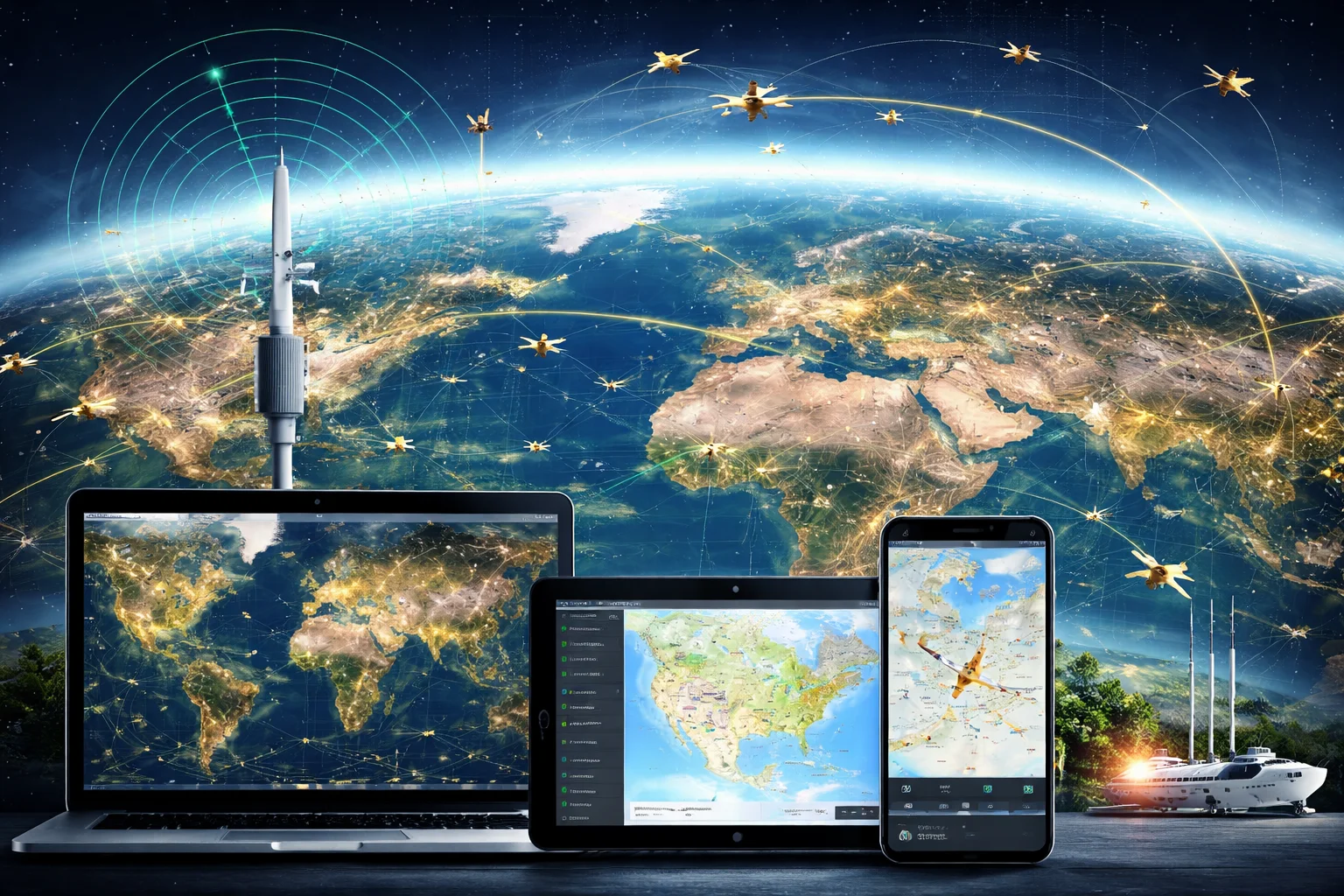
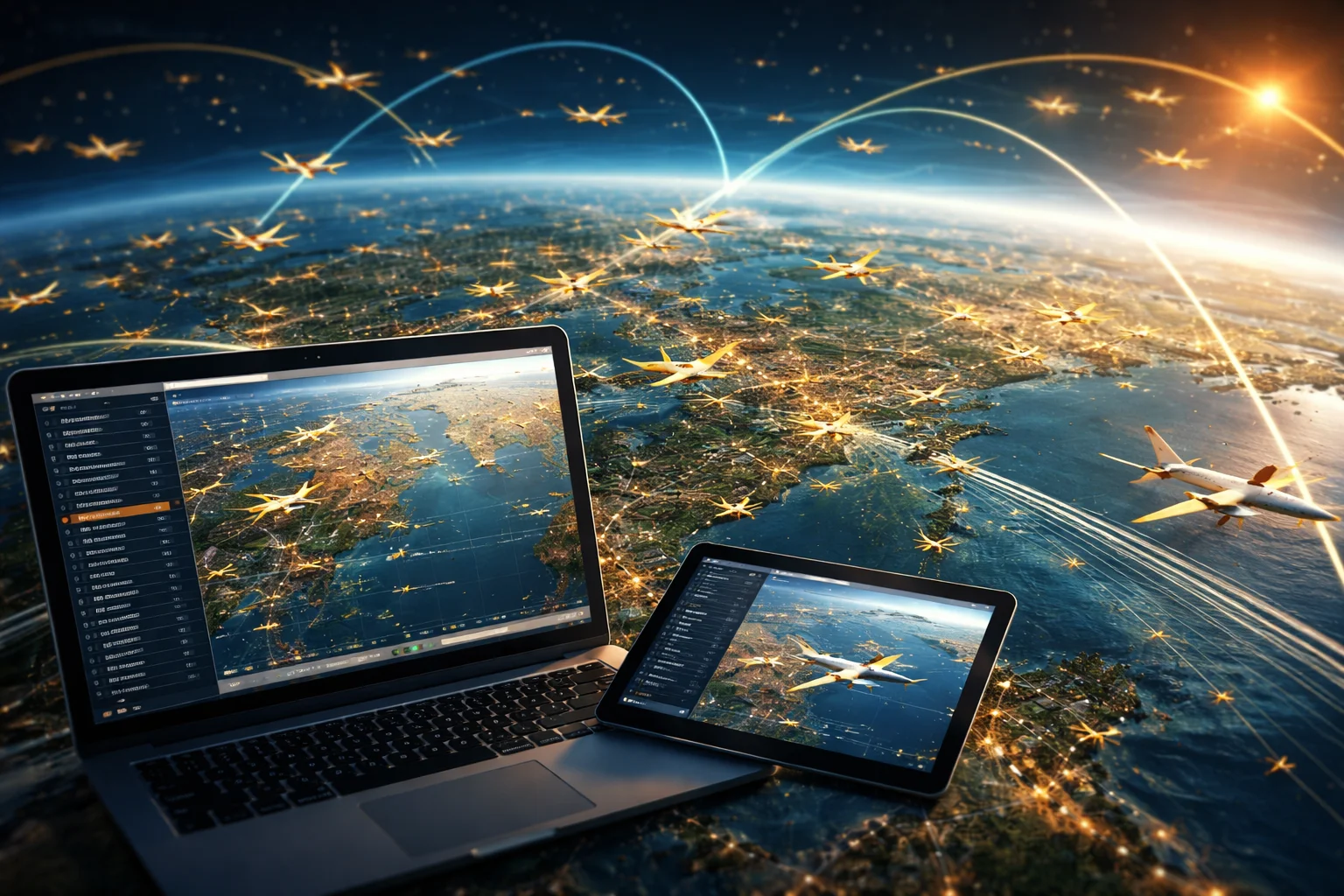
An aircraft icon usually represents real-world coordinates projected onto a map. Altitude shows how high the aircraft is flying, while speed reflects how fast it is moving relative to the ground. Together, these values explain both direction and intent.
Routes and waypoints
Flights rarely follow perfectly straight lines. Routes are defined by waypoints, which are fixed reference locations in the sky. Monitoring systems connect these points visually, showing how aircraft navigate established airways.
Status indicators and changes
Climbs, descents, holding patterns, and diversions all appear as changes in movement or altitude. These shifts are normal parts of aviation and often reflect airspace coordination rather than problems.
Common Misconceptions About Live Air Traffic Monitoring
Misunderstandings about flight tracking are common, especially among new users.
“If I can’t see a plane, it isn’t being tracked”
Some aircraft may temporarily disappear from public displays due to coverage gaps or signal limitations. This does not mean the aircraft is unmonitored. Professional systems often have access to additional data sources not shown publicly.
“All delays or route changes mean something is wrong”
Changes in flight paths are routine. Weather avoidance, airspace congestion, and efficiency adjustments all cause deviations that are planned and managed safely.
“Live maps show everything controllers see”
Public-facing maps are simplified representations. Air traffic controllers rely on far more detailed and secure systems designed specifically for operational decision-making.
The Role of Standards and Coordination
Aviation works because of shared rules and coordination rather than isolated technologies.
International data consistency
Aircraft operate across borders, oceans, and jurisdictions. Common standards ensure that flight data is understood the same way everywhere, allowing seamless handoffs between regions.
Balancing openness and security
While transparency is valuable, not all flight data is openly displayed. Certain operations require discretion, and monitoring systems are designed to respect both public interest and operational security.
How Live Monitoring Fits Into the Bigger Aviation System
Flight tracking is one piece of a larger ecosystem that includes navigation, communication, and regulation.
Integration with air traffic management
Monitoring feeds into traffic management systems that coordinate takeoffs, landings, and en-route adjustments. This integration supports orderly flows even as traffic volumes change.
Supporting long-term planning
Aggregated flight data helps planners understand how airspace is used over time. These insights guide decisions about airport capacity, route design, and infrastructure investment.
Frequently Asked Questions
Is live air traffic monitoring accurate?
Live monitoring is generally very accurate, especially in well-covered airspace. Accuracy depends on signal quality, coverage, and data sources, but multiple systems work together to reduce gaps and errors.
Can anyone access live air traffic information?
Many forms of flight data are available to the public in simplified formats. Professional-grade systems exist as well, but they are restricted to authorized users due to safety and security requirements.
Why do some flights appear to disappear temporarily?
Temporary loss of visibility can occur due to signal coverage limitations or data filtering. This does not mean the aircraft has stopped transmitting or is unaccounted for.
Conclusion
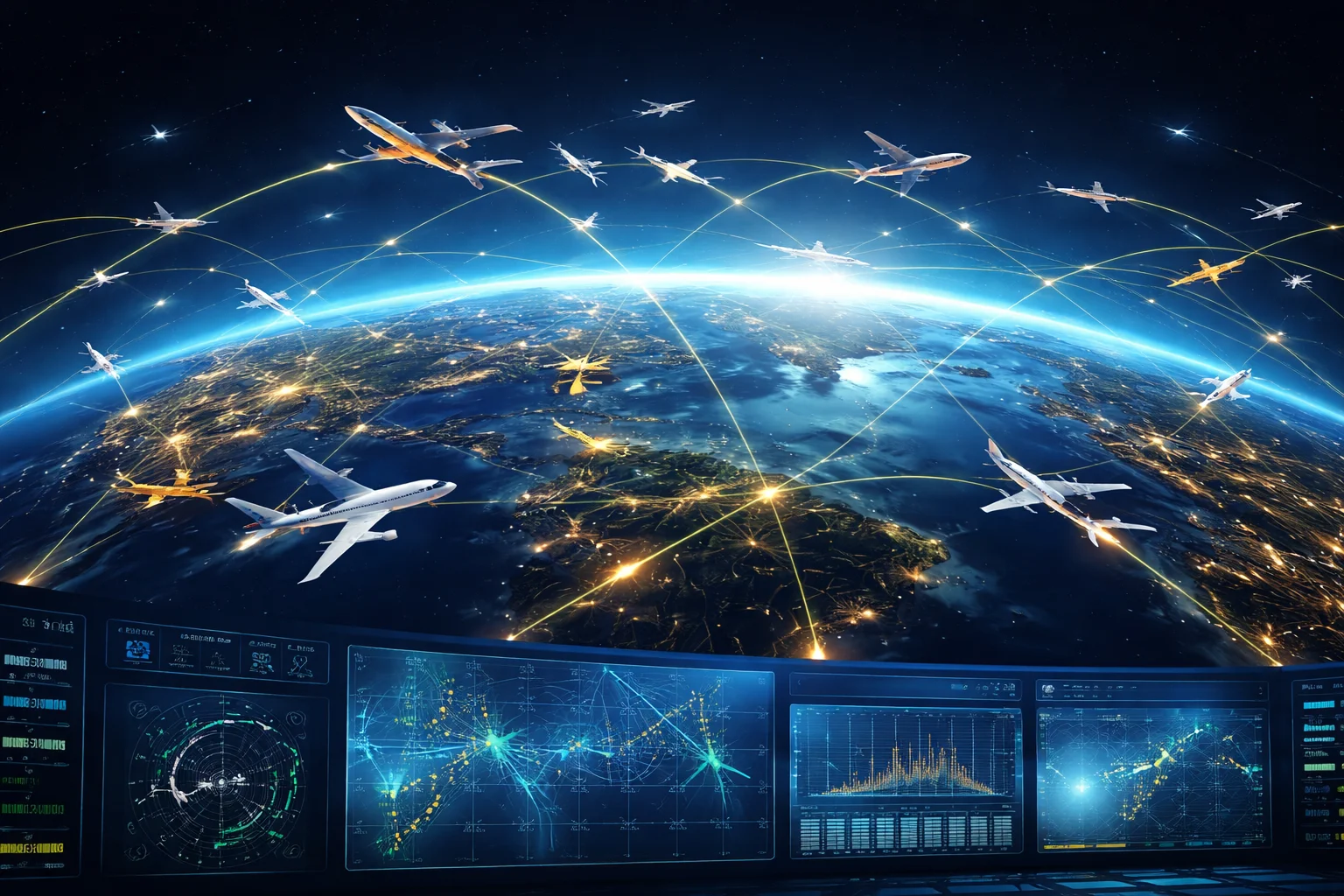
Live air traffic monitoring transforms the invisible complexity of global aviation into understandable movement. By combining radar, broadcast signals, and satellite support, it creates a continuous picture of how aircraft navigate the world’s skies.
Understanding how these systems work helps demystify flight paths, delays, and airspace coordination. More importantly, it highlights the consistency and structure that keep aviation safe and efficient over time. Rather than being a snapshot of a moment, live air traffic monitoring reflects enduring systems designed to adapt, coordinate, and connect the world through flight.

Related Posts