The collectibles industry doesn’t run on passion alone—it runs on trust. And when money starts flowing into collectibles like signed jerseys, rare trading cards, or celebrity memorabilia, that trust becomes fragile. This is exactly where Beckett Authentication enters the picture, acting like a gatekeeper between genuine history and cleverly disguised fakes.
Spend even a few minutes browsing marketplaces like eBay, and you’ll notice something interesting: items backed by Beckett Authentication Services (BAS) consistently stand out. They sell faster, attract more bids, and command higher prices. That’s not accidental. It reflects how deeply authentication has become tied to perceived value.
But here’s the twist—while Beckett is widely respected, it’s also heavily questioned. People search things like “is Beckett authentication legit,” “Beckett authentication fake sticker,” and “Beckett authentication reviews” every single day. That curiosity reveals something important: trust isn’t blind anymore.
Collectors want proof. They want verification. And more importantly, they want systems they can check themselves. Beckett has built its reputation around meeting those expectations, but like any authority in a high-value market, it faces scrutiny.
This article doesn’t just explain Beckett—it unpacks how it actually works in real-world buying and selling situations. Whether you’re holding a signed card or thinking about investing in authenticated memorabilia, understanding Beckett properly can mean the difference between a smart move and an expensive mistake.
Why Beckett Authentication Has Become a Gold Standard
The Rise of Third-Party Authentication in Collectibles
There was a time when collectors relied on handwritten certificates or the seller’s word. That time is long gone. As counterfeiting techniques improved, so did the risks. Suddenly, anyone with the right tools could replicate an autograph closely enough to fool an untrained eye.
That shift forced the market to evolve. Third-party authentication services became the neutral judges, stepping in to validate items without emotional bias. Their role quickly expanded from optional verification to essential protection.
Here’s what changed the game:
- High-value auctions started demanding verified authenticity
- Online marketplaces increased exposure to counterfeit risks
- Buyers became more educated and cautious
In this environment, authentication services didn’t just add value—they became the foundation of trust.
Beckett capitalized on this shift by offering a structured and traceable system. Instead of vague promises, collectors got something tangible: a verifiable certification tied to a database.
And here’s the real impact—authenticated items became easier to sell. Liquidity improved. Confidence increased. The entire ecosystem became more stable, and Beckett positioned itself right at the center of that transformation.
Where Beckett Authentication Services (BAS) Fits Today
Beckett wasn’t starting from zero. Its reputation in sports card grading gave it instant credibility when it launched Beckett Authentication Services (BAS). That brand recognition made collectors more willing to trust its authentication arm from day one.
Today, BAS stands alongside PSA and JSA as one of the top authentication authorities. But Beckett has carved out its own identity by focusing heavily on multi-expert verification and transparent lookup systems.
What makes BAS especially relevant today:
- A strong presence at live events for on-the-spot authentication
- A widely used Beckett authentication lookup database
- Growing trust among both casual and professional collectors
Collectors also appreciate that Beckett doesn’t operate like a black box. You can verify certification numbers online, which adds a level of accountability that feels essential in today’s digital marketplace.
Still, no system is perfect. Some users mention delays or pricing concerns in reviews. But despite that, Beckett continues to grow in popularity, largely because it aligns with what modern collectors want—clarity, verification, and resale confidence.
Understanding Beckett Authentication Services (BAS)
What Happens During the Authentication Process
Submitting an item to Beckett isn’t just a formality—it’s a detailed evaluation process that combines expertise with analytical precision. Think of it less like a quick inspection and more like a layered investigation.
The process typically includes:
- Visual signature comparison against verified databases
- Analysis of ink flow, pressure, and writing patterns
- Evaluation of timing, material, and historical context
Experts don’t just look at the autograph—they study how it was created. Was the ink consistent with the era? Does the signature match known variations from that individual? These questions guide the process.
Once the evaluation is complete, the outcome is recorded. If the item passes, it receives a Beckett authentication sticker and is logged into their system. If not, it’s rejected—no middle ground.
This structured method is what separates Beckett from informal authentication claims. It’s not about guesswork; it’s about building a case for authenticity based on evidence.
The Role of Experts and Forensic Techniques
Behind every Beckett decision is a team of specialists who’ve spent years analyzing signatures. These aren’t general collectors—they’re trained professionals with deep familiarity in specific autograph categories.
One standout aspect of Beckett is its consensus approach. Multiple experts may review a single item before a final decision is made. This reduces the risk of human error and increases reliability.
In addition to human expertise, forensic tools play an important role. While Beckett doesn’t publicly detail every technique, it’s clear that advanced comparison methods are part of the process.
This combination creates a system that’s both human-driven and data-informed. It’s not foolproof, but it’s significantly more reliable than relying on instinct or seller claims alone.
Beckett Authentication Sticker and Card Explained
How to Identify a Genuine Beckett Authentication Sticker
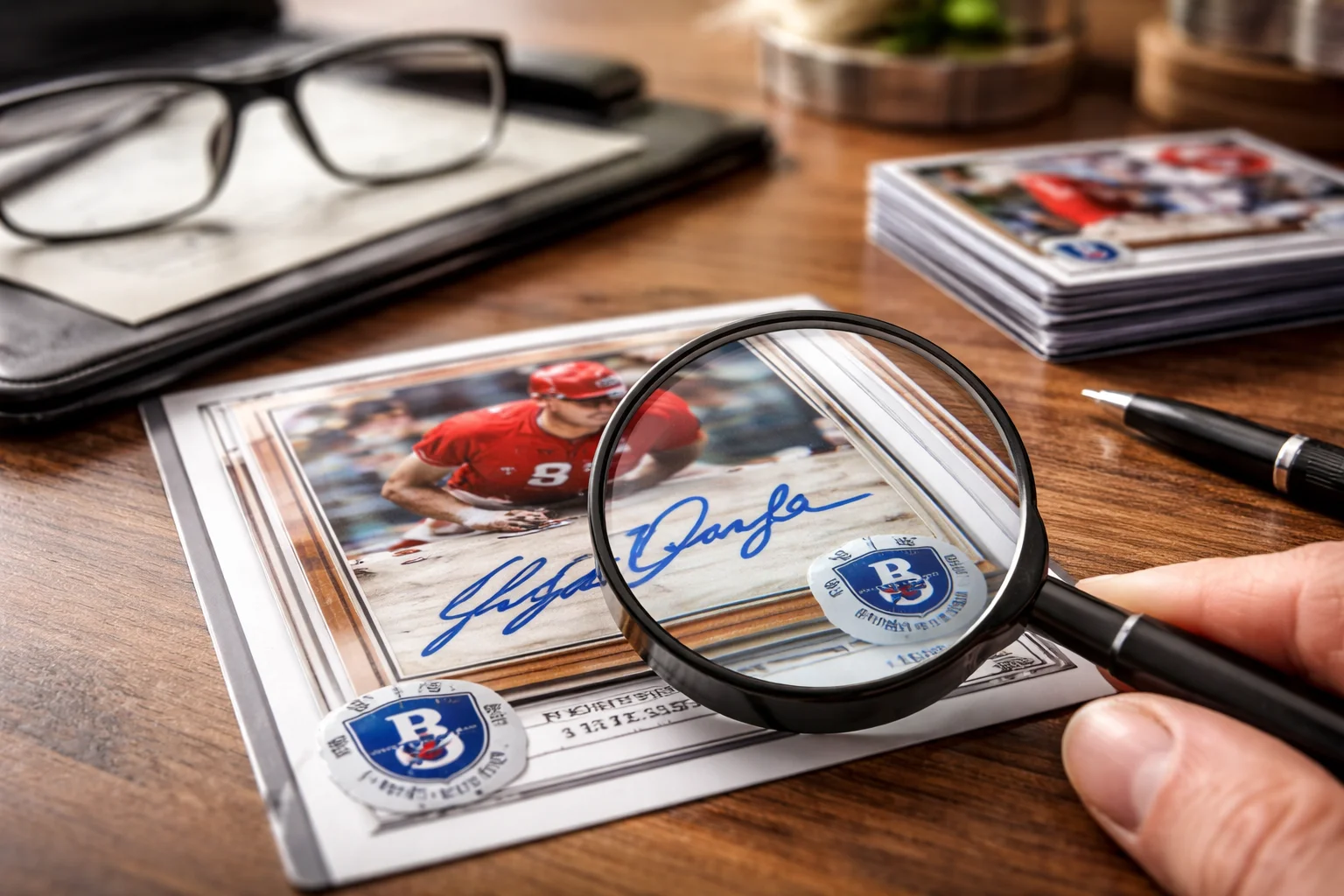
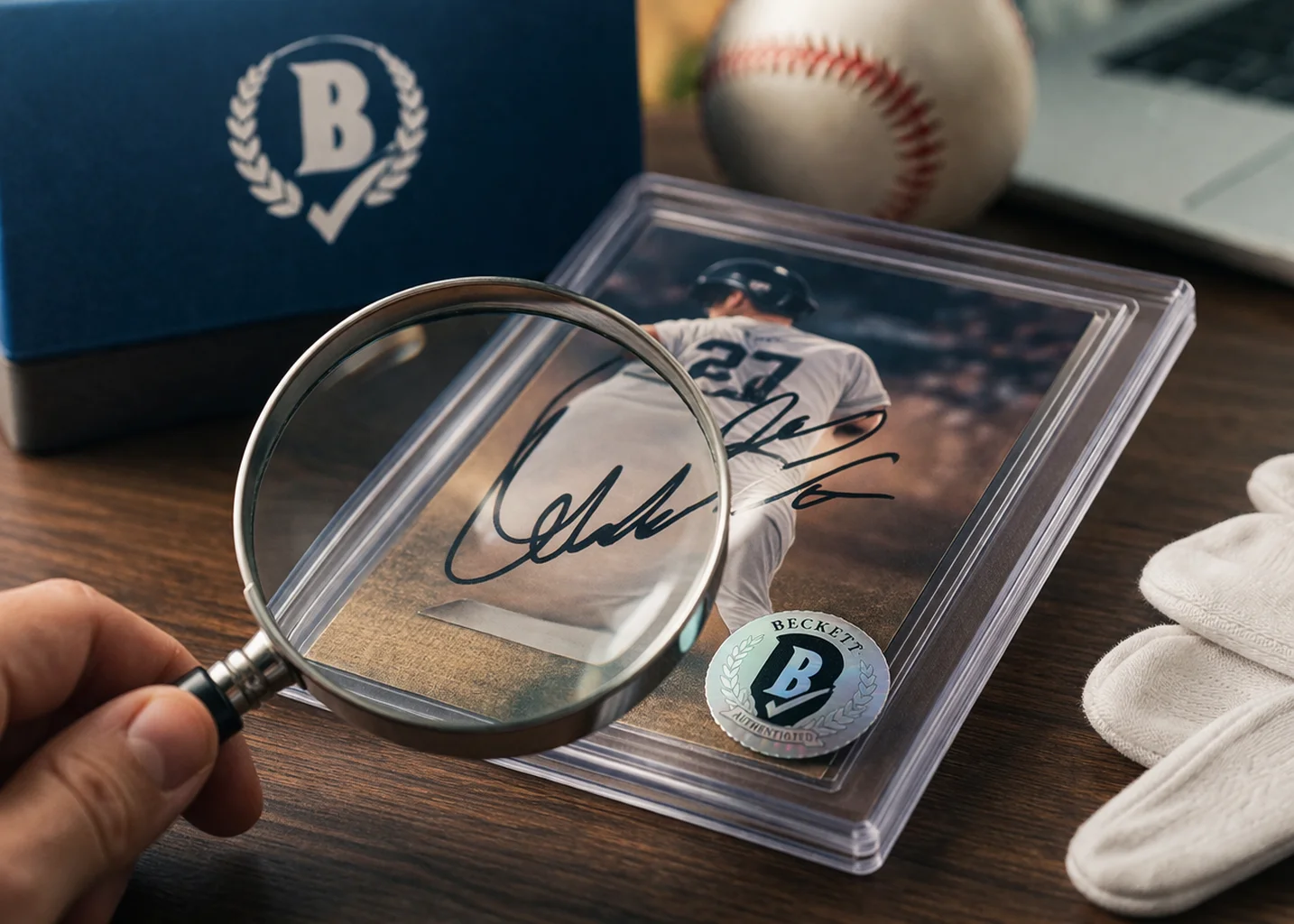
The Beckett authentication sticker is one of the most recognized markers of legitimacy in the collectibles world. But here’s the catch—its popularity has also made it a target for counterfeiters.
A genuine Beckett sticker typically includes:
- A unique serial number
- The Beckett logo with specific design details
- Tamper-evident features
The serial number is the key. Without it, the sticker is essentially meaningless. Collectors should always cross-check this number using the Beckett authentication lookup system.
Fake stickers often fail in subtle ways—slightly off fonts, incorrect holographic patterns, or numbers that don’t match any database entry. These small inconsistencies can make a big difference.
Differences Between Sticker, Certificate, and Card
Beckett offers multiple forms of authentication, and understanding the differences matters more than most people realize.
- Sticker: Attached directly to the item, includes a serial number
- Certificate (COA): Paper document confirming authenticity
- Authentication Card: A more durable, card-based verification
Each serves the same purpose but offers different levels of convenience and durability. Stickers are the most common, but certificates and cards provide additional reassurance, especially for high-value items.
Collectors often prefer having both a sticker and a certificate, as it adds another layer of credibility when reselling.
Beckett Authentication Lookup: Verifying Your Item
Step-by-Step Lookup Process
The Beckett authentication lookup system is one of its strongest features. It allows anyone to verify an item in seconds, which dramatically reduces the risk of fraud.
Here’s how it works:
- Locate the serial number on the sticker
- Visit the official Beckett authentication website
- Enter the number into the lookup tool
- Review the matching details
If the information matches your item, that’s a strong sign of authenticity. If it doesn’t, it’s a red flag.
Common Lookup Errors and How to Avoid Them
Even though the lookup system is simple, mistakes still happen. Common issues include:
- Typing errors in serial numbers
- Misreading worn or damaged stickers
- Expecting incomplete database entries
The best approach is to double-check everything. If something feels off, trust that instinct and investigate further.
Is Beckett Authentication Legit or Overrated?
Real Reviews and Market Reputation
Search for Beckett authentication reviews, and you’ll find a mix of opinions. That’s normal for any major service. However, the overall trend leans positive.
Collectors often highlight:
- Strong resale value for BAS-authenticated items
- Reliable verification systems
- Consistency in expert evaluation
Criticism usually revolves around pricing or turnaround time, not legitimacy.
Comparing Beckett vs PSA vs JSA
| Feature | Beckett (BAS) | PSA | JSA |
| Reputation | High | Very High | High |
| Lookup System | Yes | Yes | Yes |
| Multi-Expert Review | Yes | Limited | Moderate |
| Popularity | Growing | Established | Established |
Each service has strengths, but Beckett stands out for its structured and transparent approach.
Spotting Fake Beckett Authentication
Fake Sticker Warning Signs
Fake Beckett authentication stickers are becoming more common, and spotting them requires attention to detail.
Watch for:
- Missing or invalid serial numbers
- Poor print quality
- Incorrect logo design
Red Flags in Suspicious Listings
Listings that raise suspicion often include:
- Prices that seem too good to be true
- Lack of clear images
- Refusal to provide verification details
Beckett Authentication Quick Opinion Service
When Quick Opinion Makes Sense
The Beckett authentication quick opinion service offers a fast, low-cost way to get an initial assessment.
It’s useful when:
- You’re unsure about submitting an item
- You want a quick second opinion before buying
Limitations of Quick Opinions
Quick opinions are not final certifications. They’re based on limited evaluation and should not replace full authentication.
Costs, Coupons, and Value for Sellers
Pricing Breakdown and Coupon Codes
Pricing varies based on item type and turnaround time. Occasionally, Beckett authentication coupon codes are available, helping reduce costs.
Selling Cards with Beckett Authentication
Authenticated items:
- Sell faster
- Attract higher bids
- Build buyer trust
Beckett Authentication in Today’s Market Trends
Recent News and Industry Shifts
The demand for authentication continues to rise as collectibles gain mainstream attention. Beckett remains a key player in this growth.
Why Demand Keeps Growing
More collectors, higher prices, and increased fraud risks all contribute to the growing importance of authentication.
Final Word on Beckett Authentication Reliability
Is It Worth It for Collectors and Investors?
At its core, Beckett Authentication is about reducing uncertainty. It doesn’t guarantee perfection, but it significantly improves confidence in a market where doubt can be expensive.
For collectors, it offers peace of mind. For sellers, it increases value. And for investors, it provides a layer of protection that’s hard to ignore.
If you’re serious about collectibles, relying on verified authentication isn’t optional anymore—it’s essential.
FAQs
1. Is Beckett authentication legit?
Yes, Beckett Authentication Services is widely recognized and trusted in the collectibles industry.
2. How do I verify a Beckett authentication number?
Use the official Beckett authentication lookup tool and enter the serial number.
3. Can Beckett authentication be faked?
Yes, counterfeit stickers exist, which is why verification is critical.
4. What is Beckett’s quick opinion?
A fast, preliminary review service that gives an initial authenticity assessment.
5. Does Beckett authentication increase value?
Yes, authenticated items typically sell for higher prices and faster.

Related Posts