Airplanes move across vast distances, often far beyond the reach of ground-based radar. Many people assume that once an aircraft leaves land, it becomes difficult to monitor. In reality, aviation relies on a layered system designed to maintain visibility, coordination, and safety from departure to arrival.
This article explains how satellites support flight tracking and air traffic management. It breaks down the core systems, why they exist, how they work together, and what problems they solve—without relying on short-term developments or time-sensitive claims.
Why Flight Tracking Needs Satellite Support
The limits of ground-based systems
Traditional air traffic surveillance began with ground radar stations. These systems work well near airports and over populated regions, but they depend on line-of-sight coverage. Over oceans, deserts, mountains, and remote regions, radar coverage becomes sparse or unavailable.
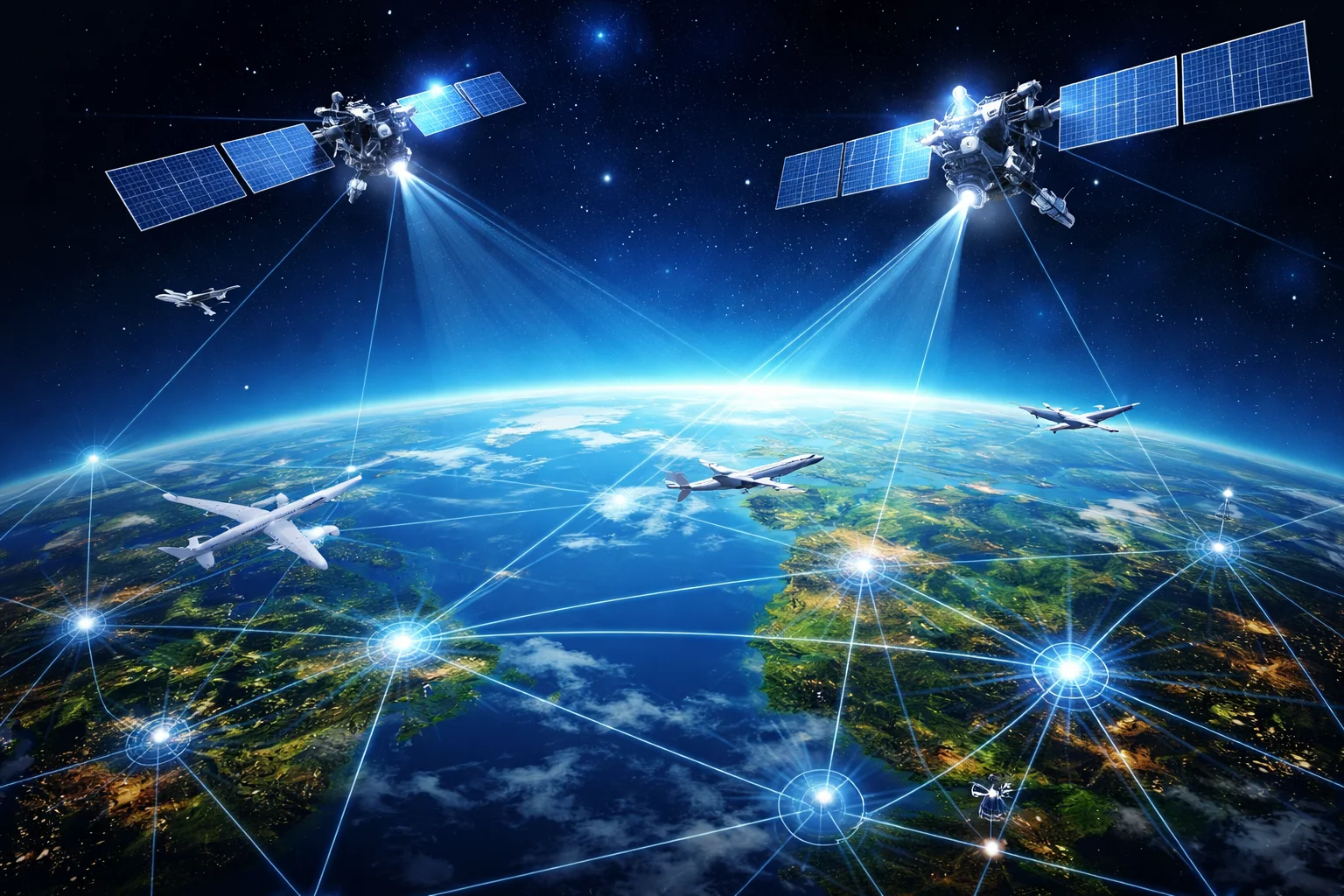
Satellites extend visibility into these gaps. They allow aircraft to be tracked where ground infrastructure is impractical, creating a more complete picture of global air traffic.
The need for continuous situational awareness
Air traffic management depends on knowing where aircraft are, where they are going, and how they relate to one another in shared airspace. Even small gaps in awareness can limit routing flexibility and increase safety margins.
Satellite systems help maintain continuity, especially on long-haul routes, polar paths, and remote corridors that would otherwise rely on procedural separation.
The Core Satellite Technologies Used in Aviation
Satellite-based navigation
Global navigation satellite systems provide precise positioning for aircraft. By receiving signals from multiple satellites, onboard systems calculate location, speed, and altitude with high accuracy.
This positioning data forms the foundation for modern flight management, enabling efficient routing, predictable arrivals, and consistent navigation standards worldwide.
Satellite surveillance systems
Satellite surveillance allows aircraft to broadcast their position, which is then received by satellites and forwarded to air traffic services. Unlike radar, this method does not require aircraft to be within range of ground stations.
This approach improves visibility over areas that historically relied on estimates and scheduled position reports.
Satellite communication links
Aircraft also use satellites for voice and data communication. These links allow pilots and controllers to exchange instructions, reports, and updates beyond the reach of terrestrial radio.
Communication satellites play a critical role in maintaining coordination across long distances and ensuring consistent contact in all phases of flight.
How Satellite Data Is Used in Air Traffic Management
Integrating satellite inputs into control systems
Satellite data does not operate in isolation. It feeds into air traffic management platforms that combine multiple sources—radar, navigation data, flight plans, and weather information—into a unified operational view.
Controllers use this integrated picture to manage spacing, sequencing, and routing decisions with greater confidence.
Supporting safer aircraft separation
When precise position data is available, aircraft can be spaced more efficiently without compromising safety. This allows airspace to handle more traffic while maintaining predictable buffers between flights.
Satellite surveillance supports separation standards that are consistent across regions, even where infrastructure varies.
Improving route efficiency
With reliable tracking and communication, aircraft can follow more direct routes instead of conservative paths designed around coverage limitations. This reduces unnecessary deviations and improves overall traffic flow.
While efficiency gains vary by region, the underlying benefit remains consistent: better information enables better decisions.
Satellite Systems and Aviation Safety
Detecting and responding to abnormal situations
Continuous tracking allows aviation authorities to recognize deviations from expected flight paths more quickly. Whether caused by weather, technical issues, or operational decisions, unexpected changes become visible sooner.
This early awareness supports faster coordination and more effective responses.
See also AI in Aviation: How Artificial Intelligence Is Improving Flight Safety
Enhancing search and rescue capabilities
When an aircraft experiences an emergency, knowing its last known position with greater accuracy can significantly narrow search areas. Satellite-supported tracking improves the quality of this information, even in remote locations.
This capability strengthens international cooperation and response planning.
The Role of Global Standards and Coordination
Why consistency matters in global airspace
Aircraft cross national boundaries routinely, often within a single flight. Satellite systems support harmonized procedures that allow seamless handovers between air traffic authorities.
Organizations such as the International Civil Aviation Organization help define standards that ensure satellite-based data is used consistently across regions.
Interoperability over ownership
The value of satellite aviation systems lies not in who operates them, but in how well they integrate. Interoperable standards allow different technologies to work together, reducing fragmentation and confusion.
This focus on compatibility ensures reliability as systems evolve.
Common Misconceptions About Satellite Flight Tracking
“Satellites replace air traffic controllers”
Satellites provide data, not decisions. Human controllers remain responsible for interpreting information, issuing instructions, and managing complex situations. Satellite systems enhance awareness but do not remove the need for expert oversight.
“All aircraft are constantly watched by satellites”
Satellite support depends on aircraft equipment, airspace policies, and operational context. While coverage is far broader than ground radar alone, tracking is still governed by defined systems and procedures.
Frequently Asked Questions
Do satellites control aircraft directly?
No. Satellites supply positioning, surveillance, and communication data. Air traffic controllers and onboard flight systems use this information to manage and fly aircraft safely.
Why can’t ground radar cover the entire world?
Radar requires line-of-sight infrastructure and significant investment. Over oceans and remote areas, satellite systems provide coverage where ground installations are impractical.
Are satellites used only for long-haul flights?
Satellite support benefits many types of operations. While especially valuable on long-distance routes, satellites also enhance navigation, communication, and surveillance closer to land.
Conclusion
Satellites play a foundational role in modern aviation by extending visibility, communication, and navigation beyond the limits of ground-based systems. They do not replace existing air traffic management structures but strengthen them, filling critical gaps and supporting consistent global operations.
By enabling accurate positioning, reliable communication, and broader surveillance, satellite systems help aviation maintain safety, efficiency, and coordination across the world’s airspace. Their value lies not in novelty, but in their ability to quietly support the systems that keep air travel predictable and trustworthy over time.

Related Posts