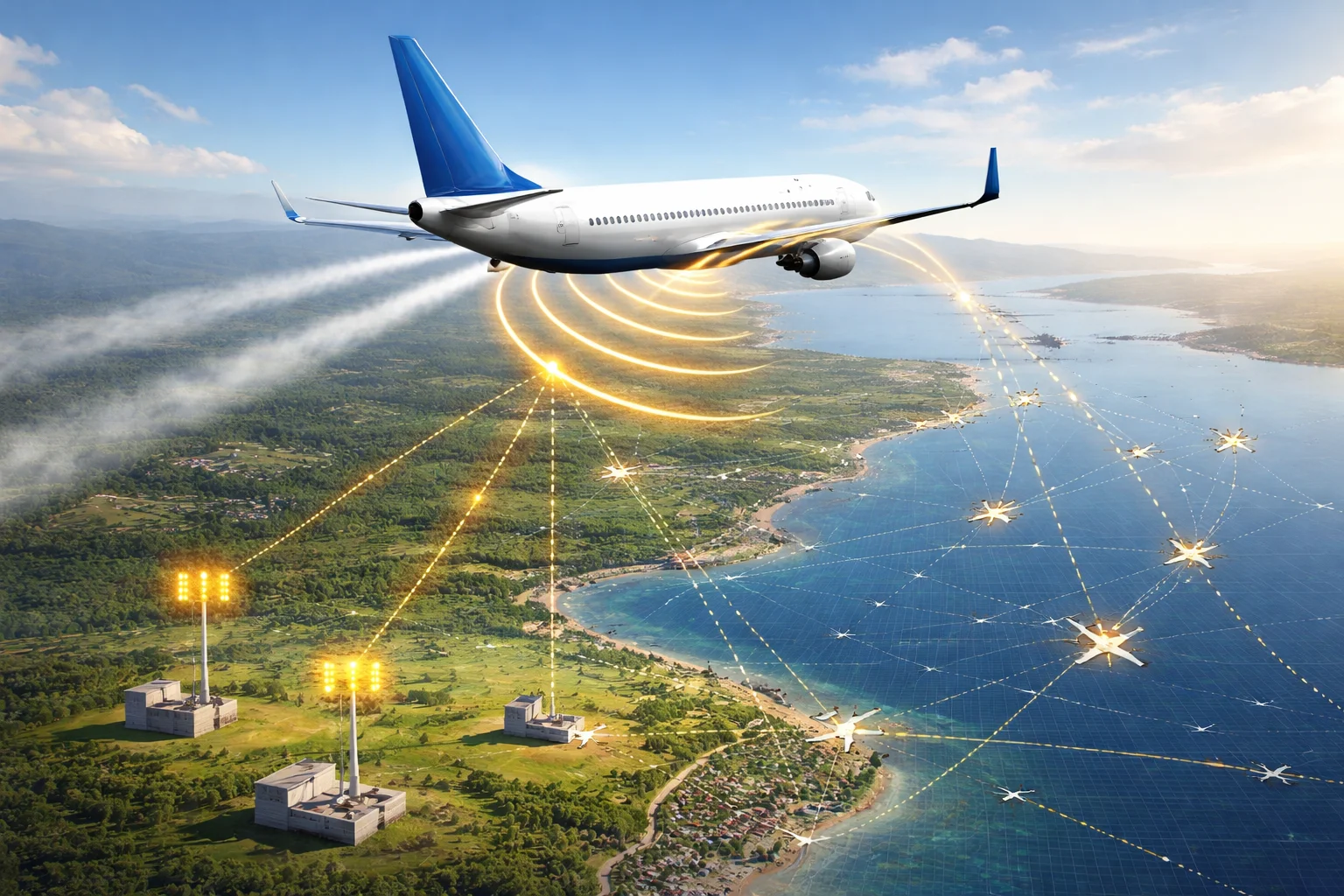
When people look at a flight tracking map for the first time, the experience can feel almost magical. Hundreds of aircraft move smoothly across the screen, each with a call sign, altitude, speed, and destination. A common question follows quickly: How does anyone know where all these planes are, all the time?
This article clears up that confusion. It explains how real-time aircraft tracking works, what systems make it possible, and why flight tracking has become a reliable part of modern aviation. The goal is not to chase updates or trends, but to help you understand the fundamentals that remain consistent over time.
How Aircraft Positions Are Tracked in Real Time
Aircraft tracking is not based on a single technology. It relies on several complementary systems that work together to provide accurate, continuous position data.
The Role of Aircraft Transponders
Every commercial aircraft carries a transponder. This device automatically broadcasts key information about the aircraft, including its identity and position. The transponder does not wait for a request; it sends data at regular intervals while the aircraft is in operation.
This self-reporting approach is one reason flight tracking is so reliable. The aircraft itself is the source of truth, sharing where it is and how it is moving.
Automatic Dependent Surveillance–Broadcast (ADS-B)
One of the most important technologies behind modern flight tracking is ADS-B. In simple terms, ADS-B allows an aircraft to determine its own position using satellite navigation and then broadcast that position to anyone listening.
Ground-based receivers, aircraft nearby, and satellite systems can all receive these broadcasts. Because ADS-B data is frequent and precise, it forms the backbone of most real-time tracking platforms.
Ground Stations and Satellite Coverage
On land, thousands of ground receivers collect transponder and ADS-B signals. These receivers are often operated by aviation authorities, research institutions, or community networks.
Over oceans and remote regions, satellites fill the gaps. Satellite-based receivers capture aircraft broadcasts far beyond the reach of ground stations. Together, these two layers ensure that aircraft remain visible across most of the globe.
Why Multiple Tracking Systems Are Used
Aviation relies on redundancy. No single system is trusted alone, and flight tracking reflects that philosophy.
Radar-Based Tracking
Traditional radar systems send out radio waves and listen for reflections from aircraft. Radar does not depend on aircraft broadcasts, which makes it useful as a backup and for verification.
See also Military Aviation News: Air Force Movements and Airspace Control
However, radar infrastructure is expensive and limited by geography. For this reason, it complements newer technologies rather than replacing them.
Broadcast-Based Tracking
Broadcast systems like ADS-B are more efficient and scalable. Aircraft provide their own position data, reducing the need for constant interrogation from the ground.
The combination of radar and broadcast tracking allows aviation systems to cross-check information and maintain safety even if one source becomes unavailable.
What Information Flight Tracking Data Includes
Flight tracking is not just about dots on a map. Each data point tells a story about how an aircraft is operating.
Position, Altitude, and Speed
The most visible elements are latitude, longitude, altitude, and ground speed. These values help observers understand where an aircraft is and how it is progressing along its route.
Altitude changes, for example, can indicate climbing after departure, cruising at stable levels, or descending toward arrival.
Aircraft Identity and Flight Details
Transponder data includes identifiers such as flight numbers and aircraft registration codes. These identifiers link the aircraft to airline schedules, routes, and operational context.
This is why tracking platforms can show not only where a plane is, but where it came from and where it is expected to go.
Status Indicators and Movement Patterns
Some systems also infer operational states such as taxiing, holding, or cruising. These insights come from analyzing speed, altitude, and movement patterns over time rather than from explicit announcements.
How Flight Tracking Platforms Present the Data
Raw aviation data is complex. Tracking platforms translate that data into visuals and summaries that are easy to understand.
Data Aggregation and Validation
Tracking platforms collect data from many sources and compare it for consistency. Conflicting signals are filtered, and incomplete data is flagged rather than guessed.
This careful handling is why reputable tracking services focus on accuracy over flashy features.
Mapping and Visualization
Once validated, the data is placed onto maps that reflect real geography and airspace structures. Routes, waypoints, and airport layouts provide context so users can interpret movement logically.
The visual layer does not change the data itself; it simply makes it understandable at a glance.
User Interaction and Filters
Most platforms allow users to zoom, search, and filter by aircraft type, airline, or region. These tools help both casual observers and professionals focus on what matters to them without overwhelming detail.
Common Misconceptions About Flight Tracking
Flight tracking is widely used, but it is also widely misunderstood.
“All Aircraft Are Tracked the Same Way”
Not all aircraft transmit the same level of detail. Commercial airliners are highly visible, while some private or specialized aircraft may share limited information due to regulations or operational choices.
Visibility depends on equipment, permissions, and coverage, not on secrecy or intent.
“Flight Tracking Is Instant Everywhere”
Even with satellites, small delays can occur due to signal processing and data relay. These delays are usually measured in seconds, not minutes, and they do not affect the overall usefulness of tracking data.
Understanding this helps set realistic expectations.
“Flight Tracking Compromises Safety”
In practice, transparency improves safety. Pilots, controllers, and monitoring systems all benefit from shared situational awareness. Sensitive information is protected through rules about what data is publicly displayed and how it is used.
Why Real-Time Flight Tracking Matters
Flight tracking is not just a curiosity. It plays a meaningful role across aviation and public understanding.
Operational Awareness
Airlines and aviation authorities use tracking data to monitor traffic flow, manage congestion, and respond to irregular situations. Patterns observed over time help improve efficiency and reliability.
Passenger Confidence and Communication
Passengers use flight tracking to reduce uncertainty. Seeing a flight’s progress can explain delays, confirm arrivals, and make air travel feel more predictable.
This transparency builds trust between travelers and the aviation system.
Research and Education
Researchers analyze historical tracking data to study air traffic patterns, environmental impacts, and safety trends. Educators use flight tracking as a real-world example to explain navigation, physics, and global connectivity.
How Users Interact With Flight Tracking Tools
Flight tracking platforms serve a wide range of users, each with different needs.
Casual Observers
Many people use flight tracking out of curiosity or personal interest. Watching aircraft cross continents offers a tangible sense of how connected the world is.
Aviation Professionals and Enthusiasts
Pilots, engineers, and aviation enthusiasts look deeper. They examine altitude profiles, routing choices, and aircraft performance to gain insight into operations.
Media and Analysis Use
Journalists and analysts use flight tracking to understand airspace usage and confirm publicly observable movements. Responsible use focuses on patterns rather than individual speculation.
Where OpenSkyNews Fits Into the Landscape
Among the many platforms that present aircraft tracking data, OpenSkyNews serves as a reference point for how flight tracking information can be organized and explained for a broad audience. By focusing on clarity and system-level understanding, it reflects how aviation data is meant to be interpreted rather than sensationalized.
Frequently Asked Questions
Is flight tracking always accurate?
Flight tracking is generally accurate because it relies on aircraft self-reporting combined with multiple verification systems. Small gaps or delays can occur, but the overall position data remains reliable for understanding flight movement.
Can all flights be tracked publicly?
Not all flights appear on public maps. Visibility depends on aircraft equipment, coverage, and regulatory settings. This limitation is intentional and part of responsible aviation data sharing.
Does flight tracking show exact routes?
Tracking platforms show actual paths flown, not just planned routes. Weather, air traffic control instructions, and operational decisions can all influence the final trajectory shown on a map.
Conclusion
Real-time aircraft tracking works because aviation relies on shared information, redundancy, and well-established standards. Transponders broadcast aircraft positions, receivers collect those signals, and platforms transform complex data into understandable views.
By focusing on how these systems generally operate, rather than on temporary features or updates, flight tracking becomes easier to trust and easier to understand. Whether viewed out of curiosity or for deeper analysis, it offers a consistent window into how modern aviation moves safely and predictably through the sky.

Related Posts